
Home / Boating Safety Manual / Special Purpose Buoys: Types and Purpose
10% OFF WITH CODE:
BLACKFRIDAY10

Special purpose buoys, also known as special marks or special buoys, are floating aids to navigation. Unlike Lateral or Cardinal buoys, they indicate a specific area, feature, or condition on the water that is not specifically about navigating channels or avoiding standard hazards.
Key takeaways
- Special purpose buoys are used to indicate specific hazards, areas, conditions or rules.
- Boaters must be able to recognize special purpose buoys to avoid dangers and navigate safely.
- Buoy colours are important to their identification, with additional information often shown in text or symbol format.
Table of contents
- Cautionary buoy
- Information buoy
- Anchorage buoy
- Diving buoy
- Mooring buoy
- Swimming buoy
- New type of buoy: the four-season navigation buoy
- Frequently Asked Questions
Cautionary buoy
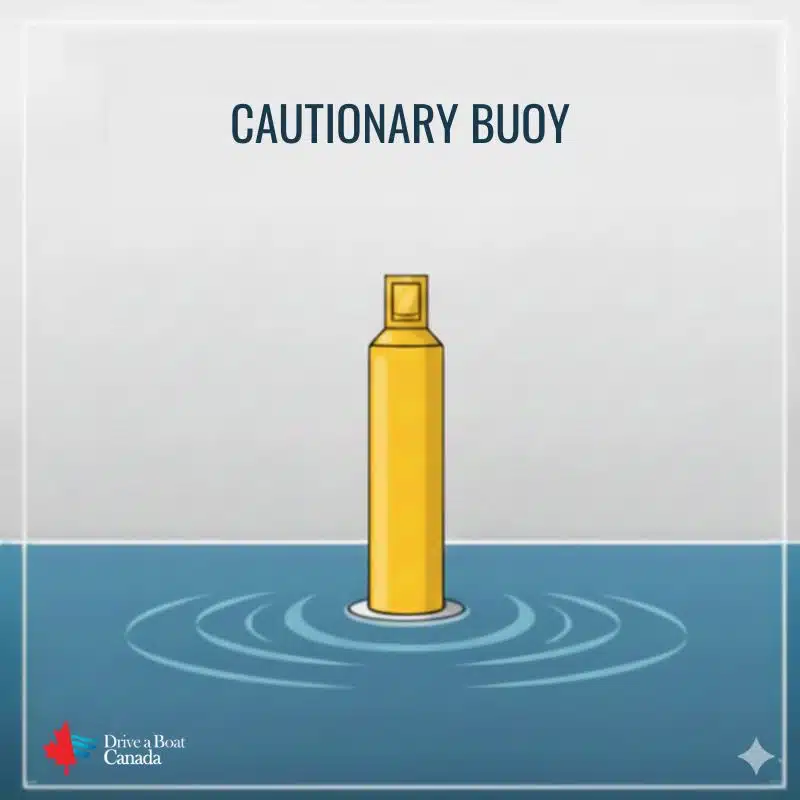
Cautionary buoys are solid yellow in colour and may be a variety of shapes.
Cautionary buoys mark dangers such as:
- Firing ranges (military activity)
- Underwater pipelines or other structures
- Race courses
- Seaplane bases
- Impassable channels.
Information buoy
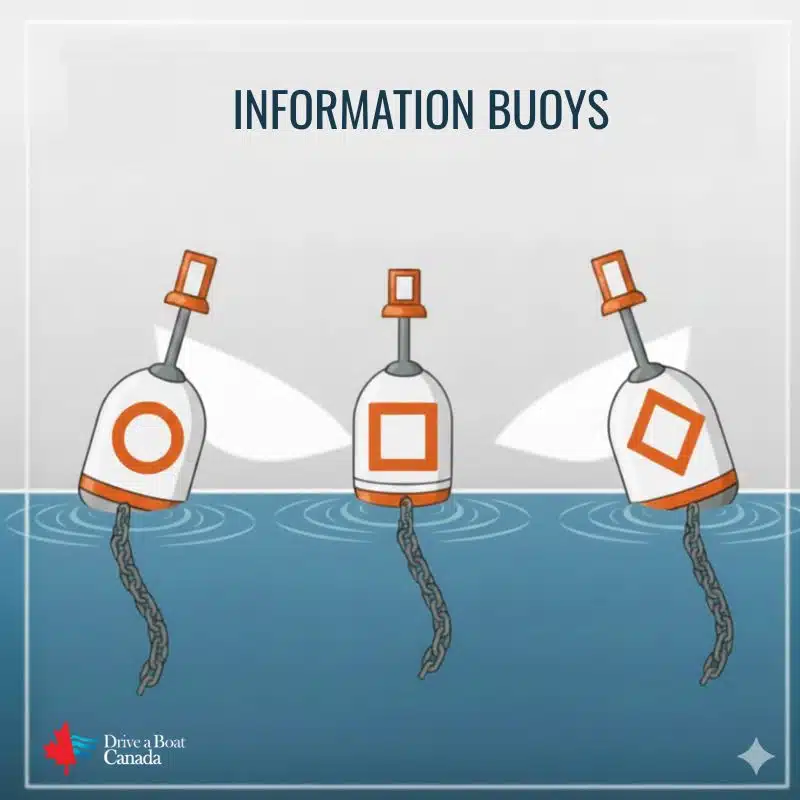
Information buoys are typically white with orange markings.
Information buoys with a square orange marker
An information buoy with a square orange marking often displays information such as:
- Location of a marina, campsite, food, fuel, or repair services
- Directions and distances for local waterways
- Speed limits, no-wake zones, and restricted areas
- Local hazards, shallow areas, or channels.
Information buoys with a diamond-shaped orange marker
An information buoy with a diamond-shaped orange marking often displays information such as:
- Random hazards such as shoals and rocks (which you need to avoid)
- Areas you are forbidden to enter by boat (“Keep Out”). Further information is illustrated inside the orange diamond.
Information buoys with a circular orange marker
An information buoy with a circular orange marking often displays information such as:
- Speed limits
- Wash restrictions, etc. Details are indicated within the orange circle.
Anchorage buoy
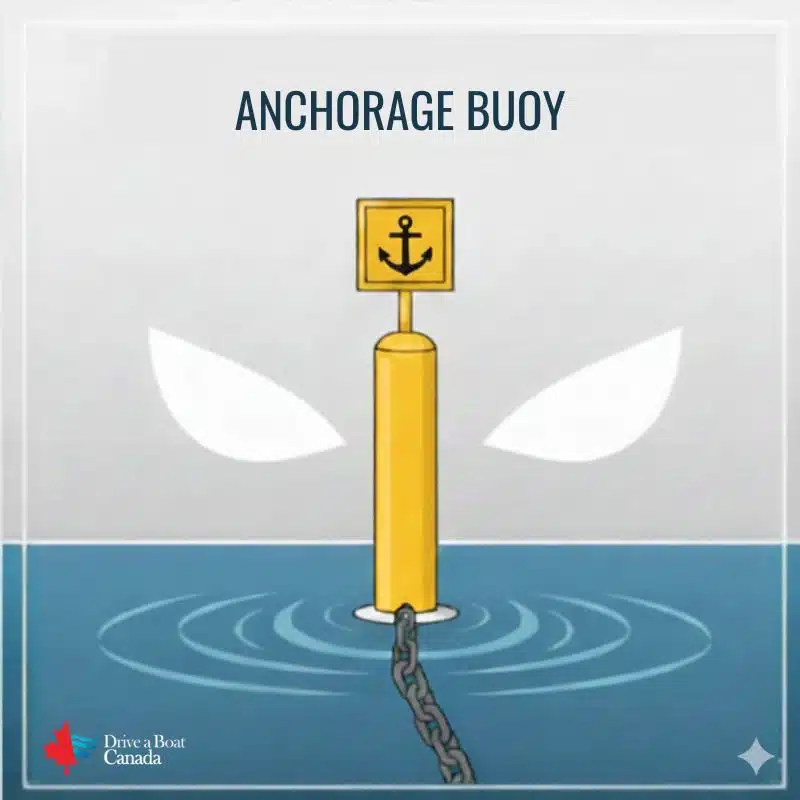
Anchorage buoys are yellow in colour and display a black anchor symbol on at least two opposing sides. They can be a variety of shapes.
Anchorage buoys are used to mark the perimeter of designated anchorage areas. You’ll need to check your nautical chart to confirm water depth.
Diving buoy
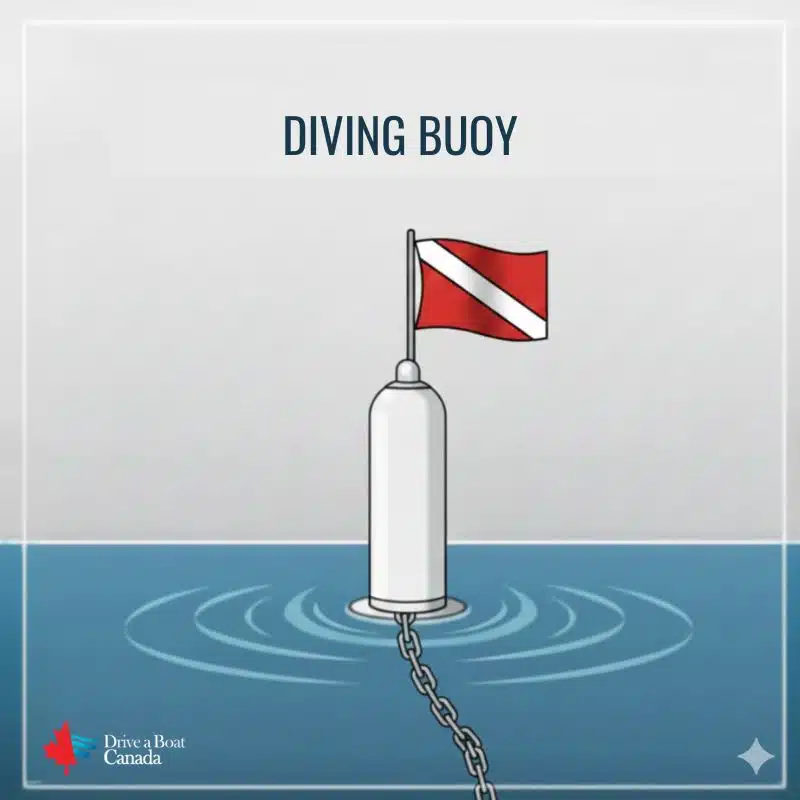
A diving buoy shows a diving flag.
It marks an area where diving activity is currently in progress.
Mooring buoy
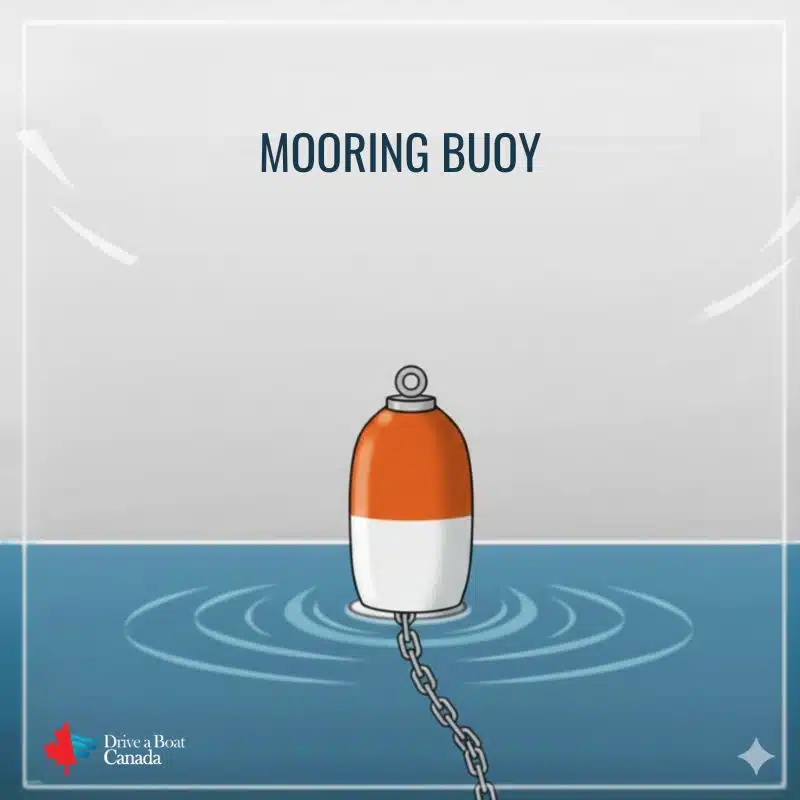
Mooring buoys are white with a solid orange section covering the top third. They can be a variety of shapes.
Mooring buoys are used for mooring vessels and other watercraft, so be aware that when you see one, a vessel may be secured to it.
Swimming buoy
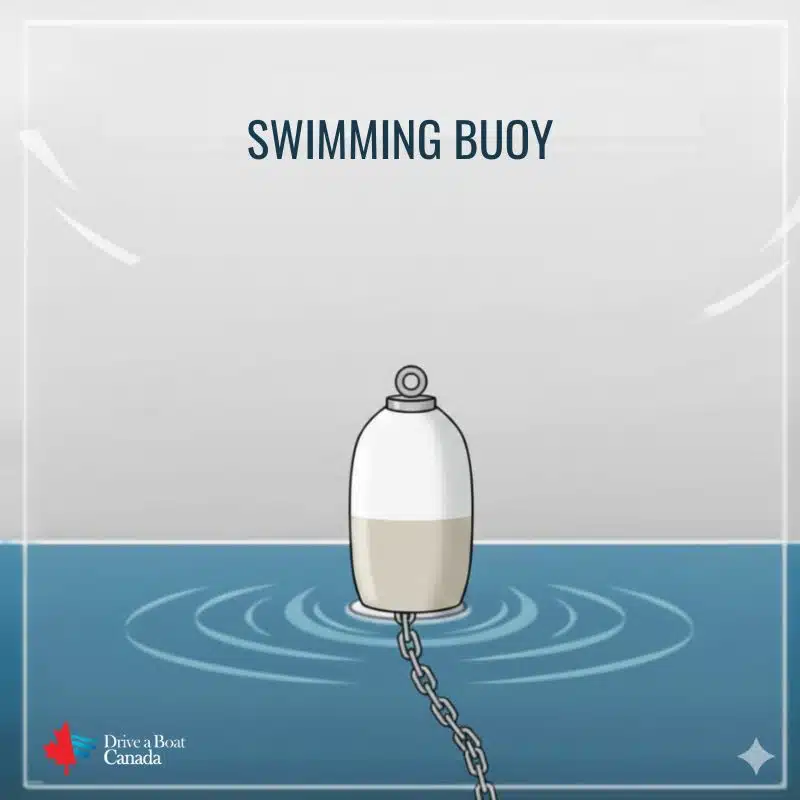
Swimming buoys are solid white in colour and are usually cylindrical in shape (“can” buoys).
They are used to mark the perimeter of a designated swimming area.
New type of buoy: the four-season navigation buoy
These unique buoys were developed in Canada by the Canadian Coast Guard and are for specific use in the St. Lawrence Seaway.
Get your boating licence with Drive A Boat Canada!
We offer a comprehensive online course leading to lifetime certification. Register with Drive a Boat Canada today, and learn everything you need to know to pass the boating exam. With your boating licence (PCOC), you can take to the water legally anywhere in the country.
Frequently Asked Questions
You are only allowed to tie up to a mooring buoy. It is illegal to tie up to any other type of Aid to Navigation (lateral, cardinal, hazard, etc.) as it could hide them from other boaters or cause them to move.
Most Aids to Navigation are maintained by the Canadian Coast Guard (CCG). However, many private buoys (like private mooring buoys or swimming buoys) are placed by individuals or organizations. All buoys must comply with the Private Buoy Regulations of Transport Canada.
Sources
- Transport Canada. TP 14542 – Cardinal Buoys and Special Buoys (2022) Marine Publications. https://tc.canada.ca/en/marine-transportation/publications/tp-14542-cardinal-buoys-special-buoys-2022
- Canadian Coast Guard. Four-season navigational buoys Aids to Navigation. https://www.ccg-gcc.gc.ca/navigation/aids-aides/four-seasons-quatre-saisons-eng.html
- Government of Canada. Private Buoy Regulations Transport Canada. https://tc.canada.ca/en/programs/navigation-protection-program/private-buoy-regulations
Latest articles

Is Your Boat a Pleasure Craft? Know the Law to Avoid Fines
A pleasure craft (whether it’s a canoe, kayak, motorboat or sailboat) is a boat that is used exclusively for recreational boating. Getting your Pleasure Craft Operator Card allows you to legally operate a pleasure craft anywhere in Canada where motorized vessels are permitted. However, it does not allow you to use your vessel for commercial Read more ›

All About Canada’s New Life Jacket Labels
Canada recently transitioned to new life jacket labels, and many boaters are wondering which life jackets they can use for recreational boating activities. You may also be asking whether you can use your old life jacket, what the icons on the new labels mean, and whether the same boating safety equipment rules still apply. Here Read more ›

Rules for Naming or Renaming a Boat in Canada
A boat’s name often reflects the entire journey that led to buying your own pleasure craft. Whether it represents a hard-earned retirement, a tribute to a loved one, or a symbol of freedom, putting that name on the hull is a special moment. In Canada, there are a few rules you need to follow for Read more ›