Home / Boating Safety Manual / Canadian Boat Navigation Rules: Basic Guide
10% OFF WITH CODE:
BLACKFRIDAY10
Safe boating begins with a clear understanding of navigation rules. This guide covers the basic principles of safe navigation for recreational boaters in Canada. It contains guidelines regarding the basic knowledge every operator needs to navigate legally and with confidence on Canadian waterways.
Key takeaways
- Boaters on Canada’s waterways rely on the Canadian Aids to Navigation System.
- Visual signals play an important role in safe navigation. Boat operators must follow all guidelines related to navigation lights, buoys, beacons, distress signals, hand signals for towed watersports, and diving flags.
- Boat operators must also be familiar with required navigational equipment. This includes nautical charts, tide tables, current tables, magnetic compasses and radar reflectors.
- Safe navigation requires that you have a solid understanding of the difference between port and starboard, and between upstream and downstream.
- Boaters should also be familiar with how (and why) to create a float plan; what a Notice to Mariners (NOTMAR) is; how to avoid doing damage with their wake and wash; how to navigate at safe speeds; how to anchor safely and correctly; and the legal requirements for carrying a manual propelling device in case of engine failure or other propulsion problems.
Table of contents
- Visual signals: navigation lights, buoys, beacons and signs
- Navigation Lights
- Buoys and Beacons
- Distress signals
- Hand signals for towed sports
- Diving Flags
- Navigation Tools: Nautical Charts, Compasses and Radar Reflectors
- Radar Reflectors
- Nautical Charts, Tide Tables & Current Tables
- Magnetic Compasses
- Concepts Related to Safe Navigation
- Port & Starboard
- Upstream and Downstream
- Other Elements of Safe Navigation
- Float Plan
- Notice to Mariners
- Wake and Wash
- Safe Speed
- Anchoring
- Manual Propelling device
Visual signals: navigation lights, buoys, beacons and signs
The goal of the Canadian Aids to Navigation System (CANS) is to allow every vessel to predict the actions of others and thereby prevent confusion and collisions.
Navigation on the water relies heavily on visual signals. Let’s take a look at the primary visual aids used in Canada.
Navigation Lights
Boats need to signal their presence via appropriate navigation lights. These notify other boats of your presence and indicate which direction you are heading. Likewise, you can rely on other vessels’ lights to tell you where they are and which direction they are heading.
Lights are generally white, red and green, and placed at strategic locations on the boat. They are especially important in poor visibility and when boating at night.
Learn more about Boat Navigation Lights.
Buoys and Beacons
Buoys and beacons are collectively called Aids to Navigation. In Canada, these floating or fixed markers follow the IALA Region B system. Buoys can be identified by colour and shape.
Those found on Canadian waterways include:
- Day beacons
- Lateral buoys (port, starboard, bifurcation and fairway buoys)
- Cardinal buoys
- Isolated danger buoys
- Other special purpose buoys (anchorage, mooring, cautionary, hazard, keep-out, control, information, diving and swimming).
Learn more about: Buoys and Markers Used in Canada
Distress signals
When in distress, recreational boaters can use visual distress flares to send out a cry for help. They may also use audio to communicate to the authorities, such as by VHF Radio.
Distress flares come in various formats:
- Rocket parachute flares (Type A)
- Multi-star flares (Type B)
- Hand-held flares (Type C)
- Buoyant or hand smoke signal flares (Type D)
- Watertight flashlight
Learn more about: Distress Flares
Hand signals for towed sports
Towed watersports are popular across the country. It’s very important to know the common hand signals for waterskiing and tubing so that, as boat operator, you know when to slow down, stop, or come to the rescue.
Diving Flags
Scuba diving and snorkeling are great ways to enjoy the marine environment, often with the help of a diving boat to carry people and gear to and from location. All boat operators need to be familiar with the two diving flags used in Canada (diver down flag and alpha flag) whether or not they are involved in diving activities themselves.
When you see a flag, slow down and steer clear. Propeller strikes pose a serious threat to anyone in the water, so you need to navigate responsibly around anyone else in the water, including swimmers.
Navigation Tools: Nautical Charts, Compasses and Radar Reflectors
Following the directions communicated by buoys, lights and even audio messages (VHF Radio, for example) requires that you have appropriate navigation equipment on board. This equipment is also key to staying safe, being seen and not getting lost.
Under the Small Vessel Regulations, the following navigation equipment is legally required for boating in Canadian waters:
Radar Reflectors
Radar reflectors help your boat be ‘seen’ by radar by amplifying the signal. They make it possible for small vessels to be clearly identified, even in poor visibility or rough water.
The Collision Regulations state that pleasure craft that are less than 20 m long or made primarily of non-metallic materials must have a passive radar reflector to help avoid collisions.
Learn more about: Radar Reflectors
Nautical Charts, Tide Tables & Current Tables
The Canadian Hydrographic Service publishes marine charts and tide tables so that recreational and commercial boaters can safely navigate coastal and inland waters.
Marine charts (also called nautical charts) provide boaters with important location-specific information, such as water depth, hazards, navigation routes, buoys and markers, currents, landmarks, and places to take shelter in case of bad weather.
It takes some doing to learn how to read one, but boat operators are expected to be familiar with the process if they plan to navigate any substantial bodies of water.
Tide tables predict the vertical movement of the tides, including details about the lowest and highest tide level and the related time of day.
Current tables refer to the horizontal movement of the water, which also impacts navigation.
Learn more about: Nautical Charts & Canadian Tide and Current Tables
Magnetic Compasses
It might seem old-fashioned, but magnetic compasses remain a reliable way for boat operators to get their bearings and are therefore a required piece of navigation equipment. Unlike electronic navigation tools, magnetic compasses will function in all conditions, even when you have no power.
Learn more about: Magnetic Compasses
Concepts Related to Safe Navigation
Following navigation rules involves understanding the related concepts of:
- Port and starboard, and
- Upstream and downstream.
Port & Starboard
To correctly interpret navigation lights, buoys and markers, and make sure you pass other vessels and navigate narrow channels on the correct side, you’ll need a solid understanding of the difference between port and starboard.
In layman’s’ terms, they can be loosely translated as right and left – but it’s not quite that simple. While right and left can change depending on whether you are facing the bow or stern of the vessel, port and starboard remain the same from every angle.
Learn more about: Port and Starboard Side
Upstream and Downstream
Being able to differentiate between upstream and downstream are vital for navigating Canada’s many rivers. Sometimes it’s as simple as checking which direction the current is flowing. Once you are aware of the flow of the water, you can correctly interpret port-hand, starboard-hand and bifurcation buoys. You’ll know instantly who has right of way and which side of the waterway you should navigate to stay safe and follow the law.
Learn more about: Upstream and Downstream
Other Elements of Safe Navigation
Boaters who have mastered the basics should keep digging and make sure they know everything they can about safe navigation.
Don’t forget the following:
Float Plan
Filing a float plan before every trip is an easy way to make sure someone on shore knows where you’re going and when you are expected back. Even though it is not required by law, a float plan makes it easier for rescue teams to find you if you should need help.
Find out what should be included on a float plan.
Notice to Mariners
A notice to mariners, or NOTMAR, is a special communication to all boat operators in a specific area. Monthly and annual editions include updates about:
- Navigational charts
- Water depth
- Obstructions
- Closures
- Restrictions
- Other navigational information
Wake and Wash
Navigating safely means being aware of the impact of your wake and wash on other vessels (especially smaller craft), swimmers, and marine environments like shorelines. Be respectful and adjust your speed as needed!
Safe Speed
Always navigate at an appropriate speed for your craft, activity and location. There are many factors to take into consideration, including:
- Visibility
- Wind
- Tides and currents
- Vessel maneuverability
- The amount of traffic on the waterway
- Navigational hazards
- Water depth
Choosing a safe speed helps avoid collisions and capsizing, keeping the waterway safe for all users.
Anchoring
Anchoring may not seem like part of navigation, but there are in fact many situations in which anchoring is required, aside from overnight stays.
Anchoring safely and effectively is a necessary skill for diving activities, in case of engine failure, when coping with some types of severe weather, in the event that you lose steering control, and when waiting for access to a channel or other area.
Anchoring is an important element of navigating, so learn what you can about the rules and techniques of anchoring a boat.
Manual Propelling device
A manual propelling device is a require piece of boating safety equipment in Canada. If your primary propulsion gives out on your sailboat or motorboat, you can rely on a set of oars or other tool to get you to safety.
Learn more about: Manual Propelling Device Check & Requirements
Get your boating licence with Drive A Boat Canada!
We offer a comprehensive online course leading to lifetime certification. Register with Drive a Boat Canada today, and learn everything you need to know to pass the boating exam. With your boating licence (PCOC), you can take to the water legally anywhere in the country.
Sources
- Government of Canada Small Vessel Regulations (SOR/2010-91) Department of Justice. https://laws-lois.justice.gc.ca/eng/regulations/SOR-2010-91/index.html
- Transport Canada. SAFE BOATING GUIDE. [PDF]. https://tc.canada.ca/sites/default/files/2024-03/tp_511e.pdf
- Government of Canada. The Canadian Aids to Navigation System 2023. Canadian Coast Guard https://www.ccg-gcc.gc.ca/publications/maritime-security-surete-maritime/aids-aides-navigation/index-eng.html
- Canadian Coast Guard. THE CANADIAN AIDS TO NAVIGATION SYSTEM [PDF]. https://publications.gc.ca/collections/collection_2024/mpo-dfo/Fs154-52-1-2023-eng.pdf
Latest articles
All About Ontario Boating and Fishing Licences
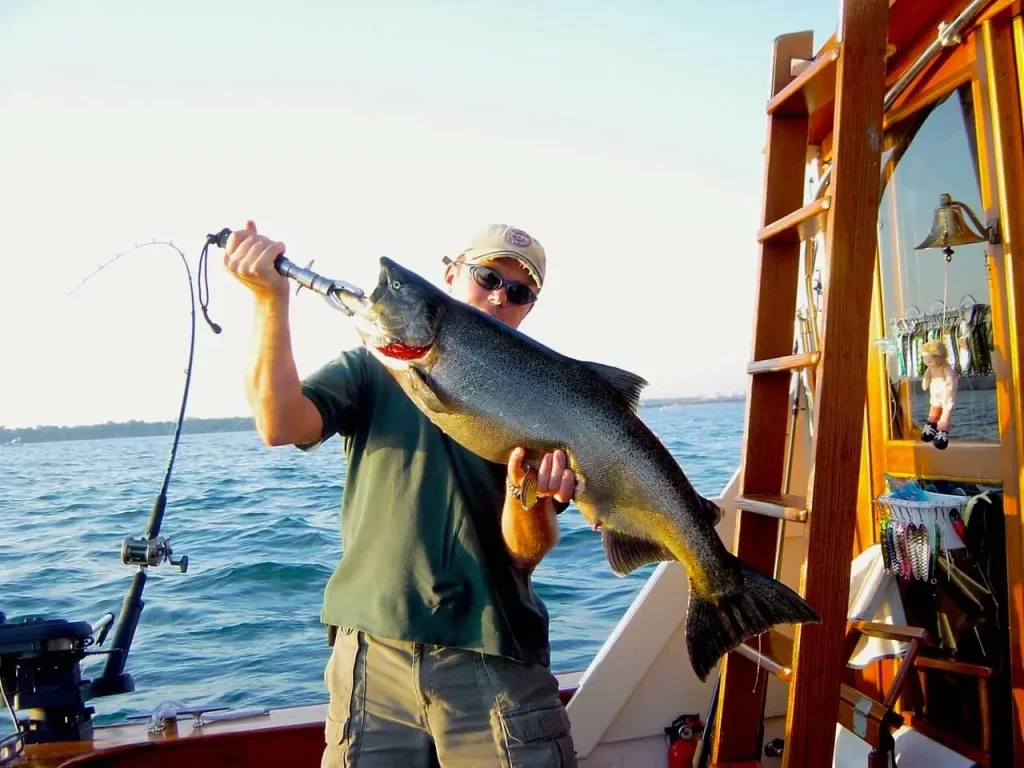
Planning a fishing trip in Ontario? If you plan on using a motorized boat, you’ll need to bring along both your boating and fishing licenses. Let us walk you through the process of obtaining these federal and provincial licenses, so that you can enjoy Ontario’s beautiful waterways legally as soon as the season opens. Read more ›
Guide to Registering a Boat in Canada
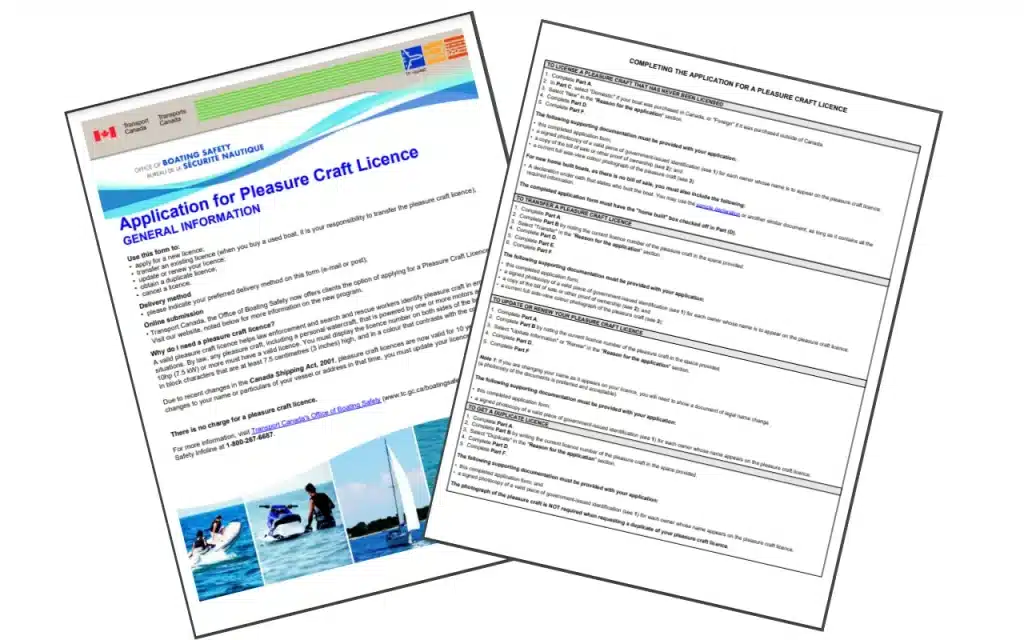
In most cases, boat registration in Canada is optional. However, most boaters will need to obtain another similar piece of documentation, a Pleasure Craft License (PCL). Let’s take a look at the details. The difference between a Pleasure Craft License and Vessel Registration Getting a Pleasure Craft License is one thing. Registering your boat is Read more ›

How to Test Your PFD: Life Jacket Inspection & Fitting
Wearing a life jacket is one of the most important elements of boating safety. But in Canada, there is no law that will force you to wear a life jacket while on a boat or near the water. Transport Canada only stipulates that: All boaters must have a life jacket nearby, within easy reach. For Read more ›